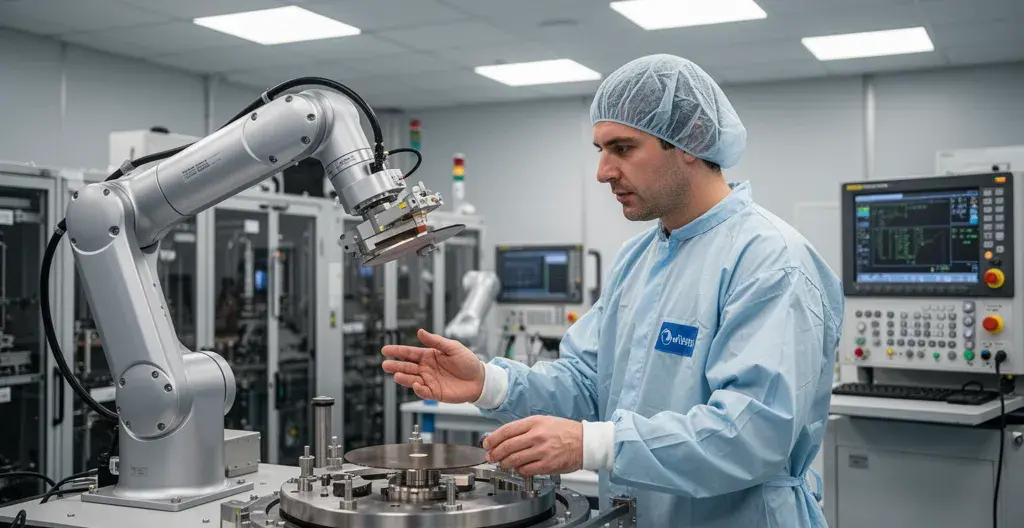
Your obsolete equipment options at a glance
- Standard exchange delivers a reconditioned replacement within roughly one week
- Full reconditioning restores your exact equipment with all wear components replaced
- Replacement makes sense only when multiple critical assemblies have failed on older units
- Rigorous testing (24-hour marathon runs) validates production-ready performance
When your OEM says ‘end of life’ – what that actually means for your fab
The phrase sounds terminal. It rarely is. What “end-of-life” actually means is that the manufacturer has stopped producing spare parts and will not provide technical support. Your equipment still works—or can work again. The OEM has simply decided supporting it no longer fits their business model.
474,000+
parts reached end-of-life in 2023 alone
According to the 2025 semiconductor obsolescence report from Manufacturing.net, this wave of EOL declarations has created substantial inventory challenges across the industry. The problem is accelerating. As noted in lifecycle data from PCB Power, advanced semiconductors now remain active for only 2–5 years—a 60% reduction compared to legacy parts.
In my experience assessing semiconductor facilities across Europe, a common misstep I observe is the prolonged search for individual spare parts on equipment the OEM has declared obsolete. Facility managers spend weeks, sometimes months, chasing components that no longer exist in supply chains. This approach frequently extends downtime considerably when a comprehensive reconditioning would restore full functionality faster.
What EOL actually blocks: Spare parts procurement, official firmware updates, and OEM technical support. What it does not block: third-party reconditioning, component replacement from specialist inventories, and return to original specifications.
This distinction matters. Your wafer handling robot is not scrap. It is an asset waiting for the right intervention.
Three paths forward for obsolete handling equipment
Frankly, I advise against sitting on the decision. Every week your equipment remains down costs production capacity you cannot recover. But which path makes sense depends on your specific situation.
Which path fits your situation?
- Need equipment operational within one week?
Standard exchange is your fastest route. A reconditioned unit ships from stock while yours enters the refurbishment queue.
- Want to keep your exact equipment with full maintenance history?
Full reconditioning restores your specific unit. Takes around 10 days but preserves equipment continuity.
- Equipment over 15 years old with multiple failed components?
Consider replacement for long-term reliability. Reconditioning becomes less economical when core assemblies need wholesale replacement.
Standard exchange: speed when downtime costs mount
I worked with a production manager at a European LED manufacturing plant last year. His pre-aligner failed, and the OEM quoted a 16-week lead time for a replacement unit. Sixteen weeks. His line capacity dropped significantly while he waited for options.
Standard exchange solved it in under a week. A reconditioned unit from stock, tested and certified, arrived while his original equipment shipped back for refurbishment. That refurbished unit eventually entered the exchange pool for the next facility facing the same situation. Specialists like those at eumetrys-robotics.com maintain inventories specifically for this purpose—pre-reconditioned robots, load ports, and pre-aligners ready for rapid deployment.
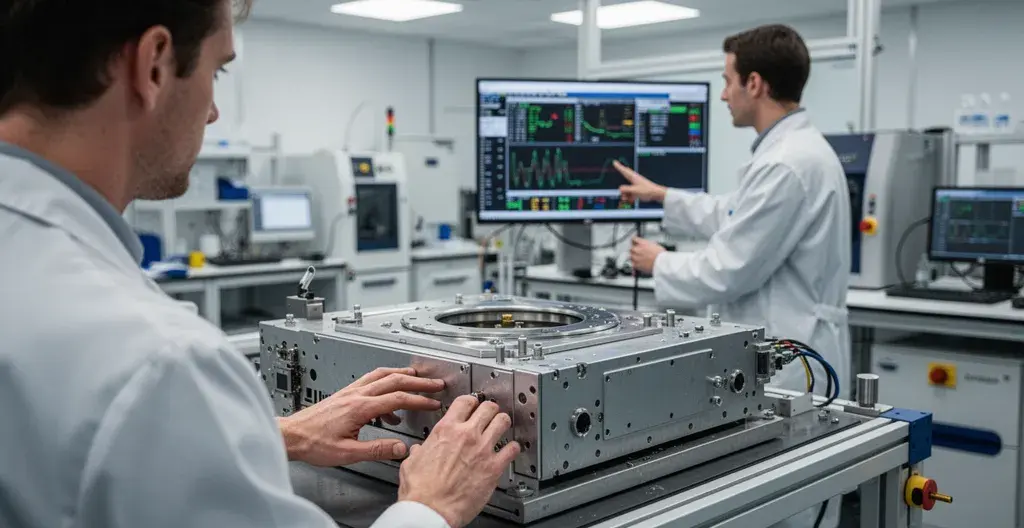
Full reconditioning: restoring your exact equipment
Some facilities prefer keeping their specific equipment. Perhaps it has modifications unique to your process, or your quality systems require equipment traceability. Full reconditioning works on your unit specifically.
The result is a rejuvenated robot or pre-aligner that functions like new at a fraction of the cost of full replacement. All worn components are replaced. Bearings, seals, motors if needed. Everything that degrades with use gets attention.
The tradeoff is time. Expect around 10 days for the full process rather than the rapid turnaround of exchange. For many operations, this is acceptable when properly planned.
Complete replacement: when it actually makes sense
My view, based on field experience: replacement makes sense in specific circumstances. Not as the default.
If your handling robot is approaching 20 years old and has suffered multiple cascade failures—motor, encoder, and controller all compromised—the economics shift. At some point, you are rebuilding the entire machine rather than reconditioning it. Here, new equipment with current specifications and full OEM warranty becomes the practical choice.
But for equipment under 15 years with isolated failures? Reconditioning almost always wins on cost and speed.
| Solution | Turnaround | Relative Cost | Best When | Warranty |
|---|---|---|---|---|
| Standard exchange | ~1 week | Lowest | Urgent downtime situations | Typically 6 months |
| Full reconditioning | ~10 days | Moderate | Equipment traceability needed | Typically 6 months |
| Complete replacement | 4-6 months | Highest | Major multi-component failure | 12+ months (OEM) |
What rigorous reconditioning actually involves
Watch out for this common trap: assuming all “refurbishment” is equal. It is not. The difference between proper reconditioning and a quick fix determines whether your equipment performs reliably or fails again within months.
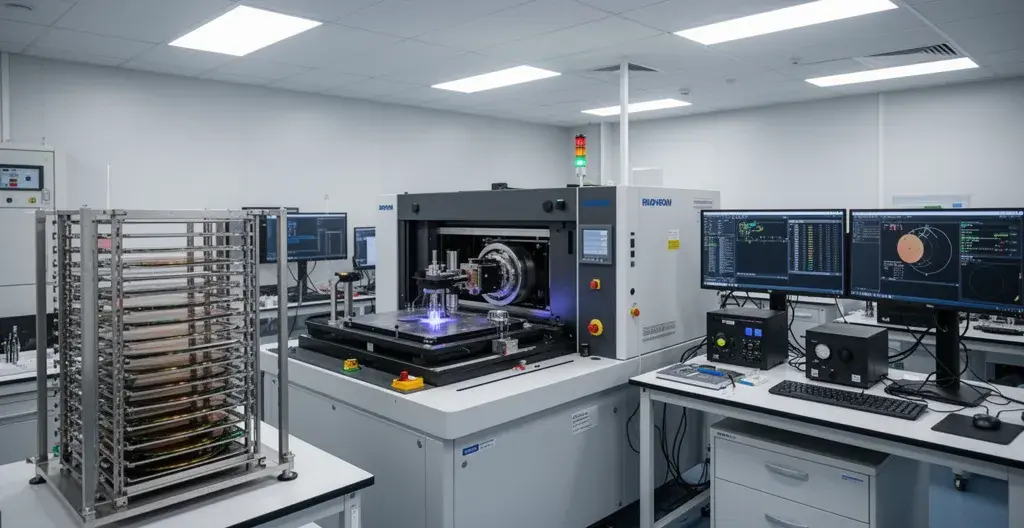
The ANSI/PEARL reconditioning standards define reconditioning as returning electrical equipment to a safe operating condition per manufacturer specifications. This is the baseline. For semiconductor handling equipment, the process goes further.
-
Equipment received and logged into tracking system -
Diagnostic assessment identifies all failed and degraded components -
Full disassembly with replacement of all wear parts: bearings, seals, belts, motors -
Calibration and functional testing against manufacturer specifications -
24-hour marathon test with actual wafer loads to verify repeatability -
Final verification, documentation, and shipping
That 24-hour marathon test matters. It is not a quick power-on check. The equipment runs through hundreds of wafer handling cycles, simulating actual production conditions. Any intermittent issues surface during this extended run. The growing focus on innovation in industrial products has pushed reconditioning providers to adopt increasingly rigorous verification protocols.
What to verify before accepting reconditioned equipment
- Confirm all wear components have been replaced, not just cleaned
- Request test reports showing placement accuracy and repeatability data
- Verify warranty terms cover both parts and labour
- Ask about the marathon testing duration and wafer load count
Questions I hear from every production manager
Scepticism is reasonable. You are trusting critical production equipment to a process you may not have used before. Here are the concerns I address most frequently.
Your reconditioning questions answered
Will reconditioned equipment match original specifications?
Yes, when properly reconditioned. The process specifically targets returning equipment to OEM specifications. Placement accuracy, repeatability, and throughput should match or exceed original performance—verified through the testing protocols described above.
What if additional problems are discovered during reconditioning?
This happens. Diagnostic assessment sometimes reveals degradation beyond the original failure. Reputable providers contact you with a revised scope and quote before proceeding. You should never receive a surprise invoice. If additional work changes the economics significantly, you can reassess options.
How does warranty coverage work for reconditioned equipment?
Standard practice is around 6 months from delivery, covering both parts and labour. Some providers offer extended coverage. Always confirm warranty terms in writing before committing—and verify what specifically is covered.
Can any manufacturer’s equipment be reconditioned?
Specialist providers typically work across multiple EFEM manufacturers. Robots from major OEMs, load ports, pre-aligners—the expertise transfers across brands. Ask about specific experience with your equipment model during initial assessment.
What testing proves the equipment is production-ready?
The 24-hour marathon test is the benchmark. Equipment runs continuous wafer handling cycles—hundreds of transfers—under conditions replicating your production environment. Accuracy measurements confirm positioning precision remains within specification throughout. Ask for documented test results.
For deeper insight into quality standards for industrial manufacturing, explore our related guide on verification protocols across the sector.
The next step for your obsolete equipment
Your handling robot, load port, or pre-aligner sitting idle is not the end of the story. It is the beginning of a decision. Standard exchange for speed. Full reconditioning for equipment continuity. Replacement only when the numbers genuinely support it.
The question to ask yourself now: how much is each additional day of downtime actually costing your operation? That answer usually clarifies which path fits.